Skip to content
Parallax stands with Ukraine - read our commitment
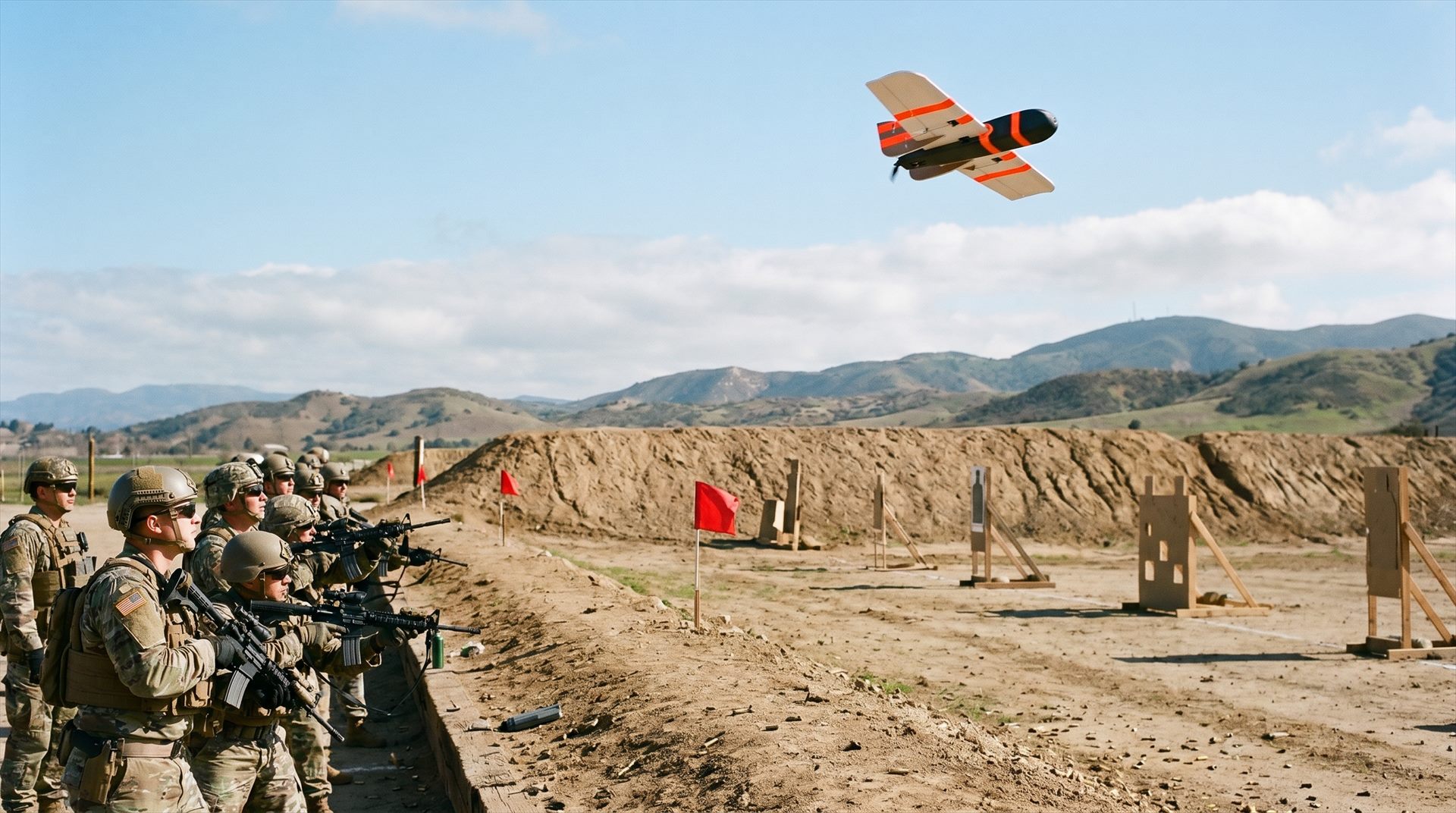
Parallax Aerofold target drone concept over a supervised training range
Range training concept visualization for Parallax Aerofold target drones.
Home/Parallax Aerofold Series
AEROFOLD · TARGET DRONES · RANGE TRAINING

Low-cost sUAS targets for kinetic training reps.

Parallax Aerofold Series is a planned family of inexpensive, expendable small UAS target drones for authorized military, law enforcement, and public-safety training environments.

The purpose is direct: give ground teams aerial targets they can detect, track, engage, and review without turning every rep into a multi-thousand-dollar aircraft loss.

Target-only Low-cost airframes Supervised range use Scoped customer conversations
// 01

Expendable Target Airframes

Small UAS targets built around structured engagement reps, rapid replacement, and training-cost discipline.

// 02

Range-Supervised Training

Intended for authorized ranges, supervised evolutions, and lawful training environments with safety controls in place.

// 03

Kinetic Training Support

Built to support teams practicing identification, tracking, lead, timing, and engagement decisions against low-cost aerial targets.

// 04

Development Stage

Aerofold is concept-stage. Final airframes, operating envelopes, procurement paths, and range procedures are not public.

01 — The Training Gap

Teams need more live aerial reps than current target economics allow.

Small UAS threats move fast, change profile quickly, and force ground teams to make decisions under time pressure. That skill cannot be built from slides alone.

Live training is expensive when every target drone costs thousands of dollars. Aerofold is aimed at the opposite problem: make target losses affordable enough that units can train repeatedly instead of sparingly.

02 — Airframe Direction

Simple target aircraft. Fast replacement cycle.

Aerofold is being shaped around inexpensive materials, field-visible profiles, and production choices that support training volume.

The design direction favors low-cost target losses, quick reset between lanes, and enough visual realism to force useful identification and tracking decisions.

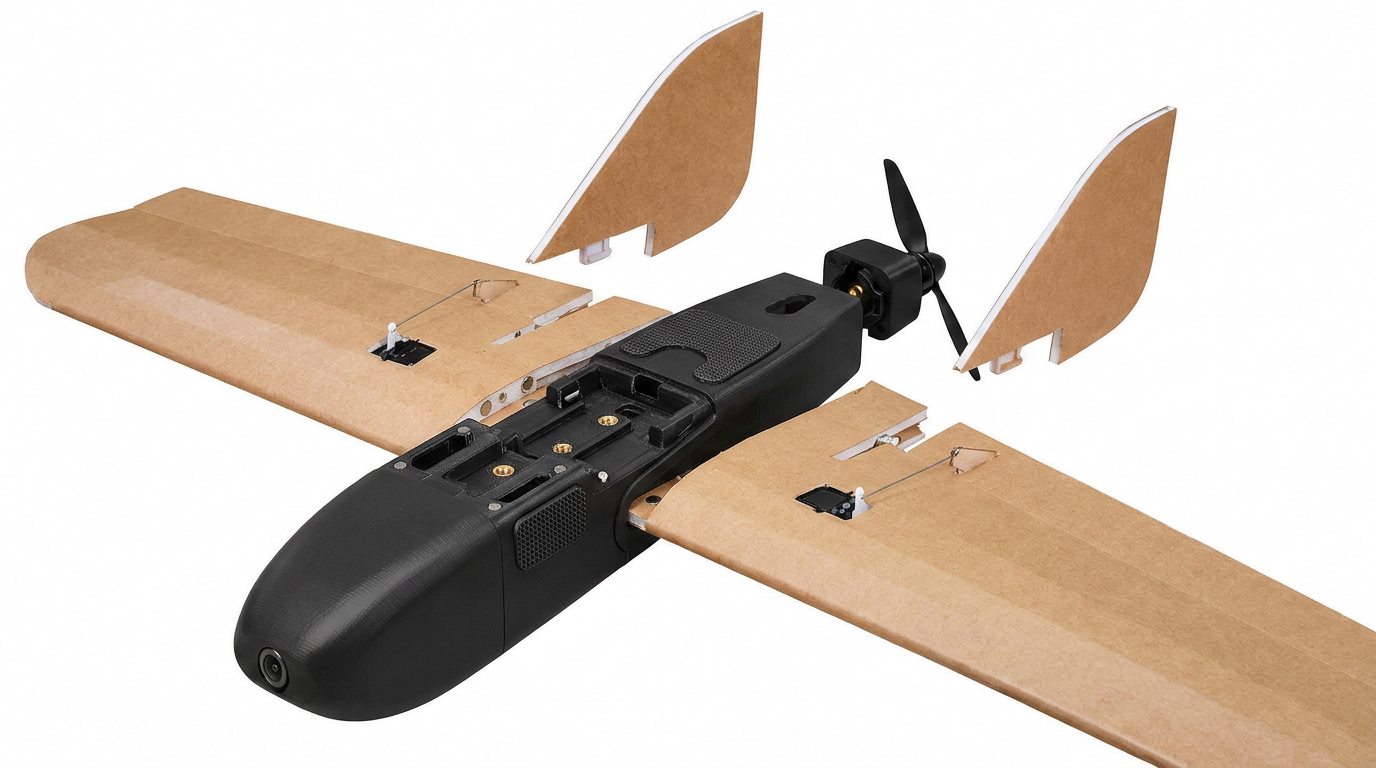
Parallax Aerofold modular target drone render with removable wing and tail elements
Product direction Modular target drone concept focused on inexpensive replacement parts and range training volume.
03 — The Product Direction

Cheap-to-produce sUAS targets for ground-force training.

Parallax Aerofold Series is being developed as a low-cost target drone line for authorized kinetic training. The intent is to provide realistic aerial target behavior without exposing training teams to unnecessary cost or fragile one-off aircraft.

  • Designed as target aircraft for lawful, authorized training use.
  • Focused on reps for detection, tracking, engagement timing, and after-action review.
  • Built around cost discipline, repairability, and fast replacement rather than premium sensor payloads.
  • Positioned for military, law enforcement, public safety, and training-provider conversations.
04 — Use Cases

Purpose-built for target engagements.

Aerofold is not a general hobby drone line. It is framed around supervised training environments where teams need realistic, low-cost aerial targets.

// MIL

Military Ranges

Low-cost target drones for authorized range events, familiarization lanes, and ground-force aerial engagement reps.

// LE

Law Enforcement Training

Supervised small-UAS target exposure for agencies building response posture around events, infrastructure, and public safety.

// PS

Public Safety Teams

Practical training targets for organizations that need to recognize and respond to hostile or negligent drone activity.

// PARTNER

Training Providers

Partner conversations for organizations running lawful, supervised drone familiarization or counter-sUAS awareness events.
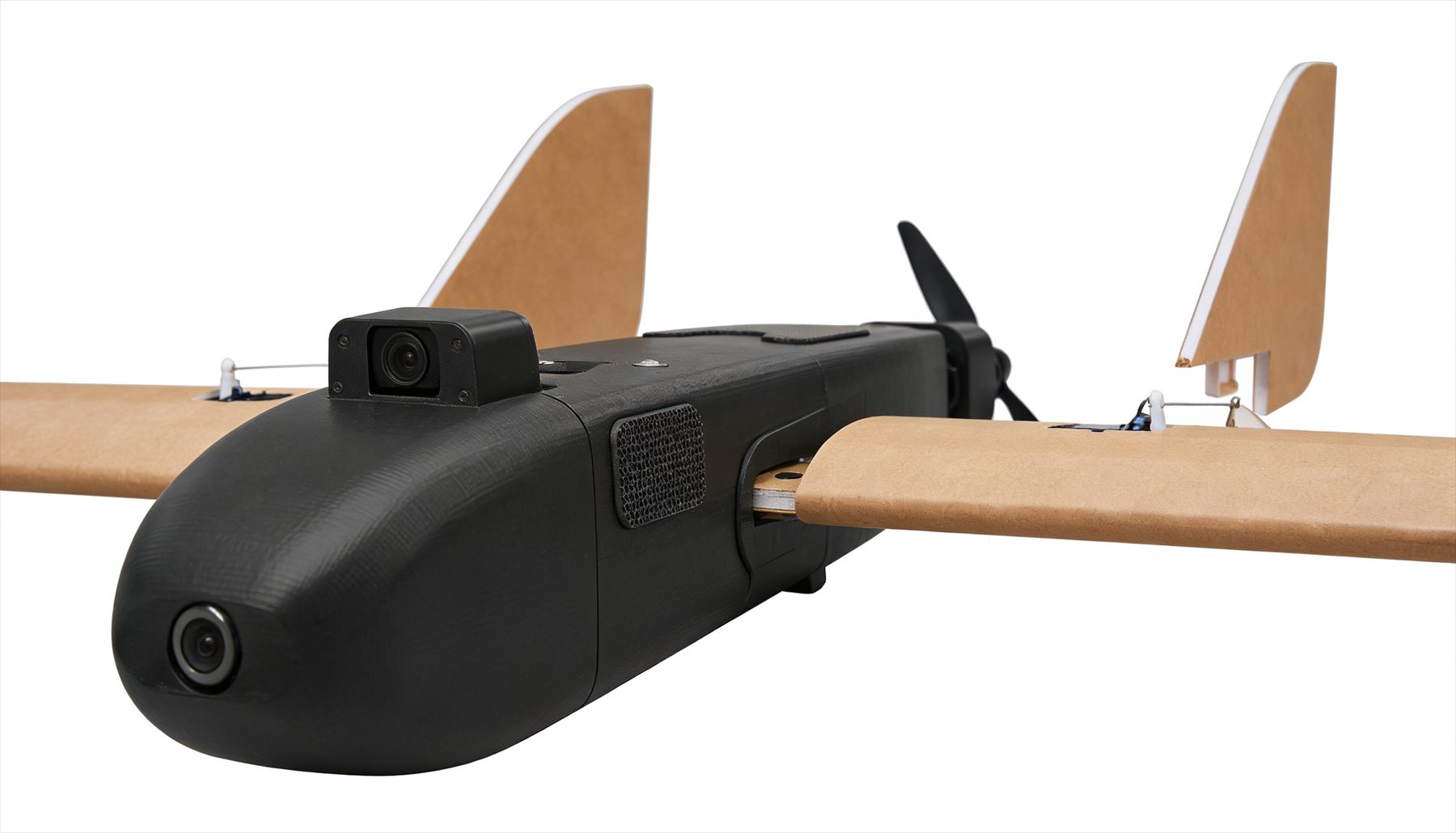
Close view of a Parallax Aerofold target drone body and wing profile
Training focus Airframe visuals support recognition, lead, timing, and after-action review without publishing operating details.
05 — Training Loop

More targets in the air. More useful reps on the range.

Aerial target engagement is a perishable skill. Teams need repeated looks at moving aircraft, not rare demonstrations.

DetectBuild early recognition of small aerial profiles in realistic range context.
TrackPractice movement, lead, timing, and communication under supervision.
EngageRun lawful kinetic reps against target aircraft inside approved training conditions.
ReviewUse each repetition to improve stance, sight picture, team calls, and decision speed.
// USE POSTURE · LAWFUL · SUPERVISED · TARGET-ONLY

Target drones only. Supervised training only.

Aerofold is framed for lawful, supervised training where authorized personnel engage target aircraft under range, agency, or customer safety procedures. It is not presented as a payload platform, surveillance aircraft, autonomous offensive system, or unsupervised public-use drone.

Public materials intentionally avoid detailed build, operating-envelope, control, and countermeasure information. Final use, airspace, safety posture, staffing, and legal requirements must be scoped per customer and training site.

06 — Development Priorities

Cost discipline first. Realistic reps second. Site discipline always.

Low Replacement CostDesign direction favors simple parts, fast production, and affordable losses over expensive aircraft.
Readable Target BehaviorFlight profiles should give trainees meaningful visual tracking and engagement cues without disclosing sensitive implementation details.
Repairable and StructuredTraining value depends on getting back into the next rep quickly.
Scoped DeploymentEvery use case requires authorized site planning, operator control, range discipline, and customer-specific safety posture.
07 — Next Step

Discuss target-drone training needs with Parallax.

Reach out if your organization needs low-cost sUAS target drones for authorized kinetic training, range familiarization, or partner evaluation. Initial conversations should stay releasable and focus on training objectives, range environment, safety controls, and procurement constraints.